Health and Safety Policy for Landscapers Southwark
 This health and safety policy sets out the standards expected across all landscaping activities, with a clear focus on protecting staff, clients, visitors, and the public. Whether carrying out garden maintenance, site clearance, soft landscaping, or rubbish collection and waste removal as part of a broader outdoor service, every task must be planned and completed with care. The aim is to reduce risk, maintain safe working conditions, and support a professional approach to every project.
Our landscaping team recognises that outdoor work can involve changing ground conditions, sharp tools, lifting hazards, moving vehicles, and exposure to weather. For that reason, all work must be assessed before it begins, and controls must be put in place to manage foreseeable risks. This policy applies to all employees, contractors, and temporary staff involved in landscaping operations.
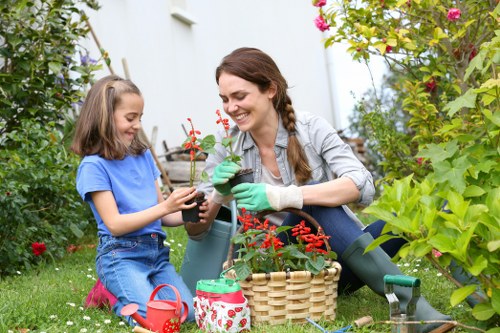 A safe working environment begins with proper preparation. Tasks should be reviewed so that tools, machinery, and materials are suitable for the job and used correctly. If waste, green debris, soil, timber, or general rubbish is to be removed, it must be sorted and handled in a way that avoids contamination, cuts, trips, and overloading. Good housekeeping is essential at every stage.
All workers are expected to wear appropriate personal protective equipment, including gloves, safety boots, eye protection, hearing protection where necessary, and high-visibility clothing when working near vehicles or public areas. PPE must be maintained in good condition and replaced when worn or damaged. In addition, staff must understand how to use each item correctly and must not begin work without the required protection.
Equipment safety is a core part of the policy. Tools, mowers, cutters, strimmers, compactors, and similar machinery must be inspected before use and kept in safe working order. Defects should be reported immediately and equipment taken out of service if there is any doubt about its condition. Only trained and authorised personnel should operate machinery, and no one should improvise with equipment or bypass safety features.
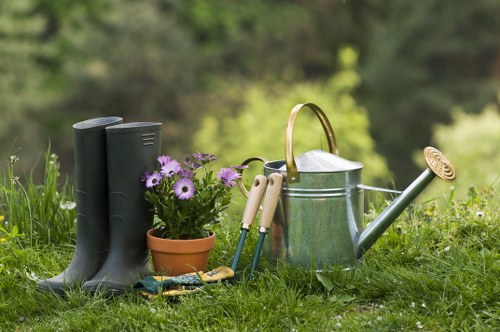 Manual handling must also be controlled carefully. Landscaping often involves lifting bags, moving plant stock, carrying paving materials, and loading rubbish or green waste. Workers should assess the weight, shape, and stability of each load before lifting. Where possible, mechanical aids should be used, heavy items should be split into smaller loads, and team lifting should be arranged for awkward objects. Safe lifting practices help prevent injury and fatigue.
Working outdoors introduces additional hazards such as uneven ground, mud, roots, standing water, and hidden debris. Sites must be checked for trip risks, unstable surfaces, overhead obstructions, and nearby services before work starts. Barriers, cones, or other controls should be used where needed to separate work areas from pedestrians, occupants, and passing vehicles. This is especially important on busy domestic or commercial premises where rubbish disposal, loading, or material delivery may affect access routes.
Weather conditions can quickly change the level of risk. Hot weather may lead to dehydration and heat stress, while cold, wet, or windy conditions can create slip hazards and reduce visibility. Supervisors and workers must take conditions into account, pause work where necessary, and ensure drinking water, rest breaks, and suitable clothing are available. Work should never continue when conditions make it unsafe to do so.
Safe handling of waste and rubbish is part of this policy whenever clearance or disposal forms part of the service. Waste should be separated where possible, placed in appropriate containers, and loaded carefully to prevent spillage or injury. Hazardous items must never be mixed with general waste. Any suspected asbestos, chemicals, sharps, contaminated materials, or unknown substances must be treated with caution and reported immediately for specialist handling.
Training and supervision are essential for safe landscaping operations. Workers must receive induction training, task-specific instruction, and refresher training when procedures or equipment change. Supervisors should make sure that employees understand safe systems of work, emergency arrangements, and reporting procedures. New staff, younger workers, and anyone unfamiliar with a site should be closely supervised until they demonstrate competence.
 Accident and incident reporting must be taken seriously. Any injury, near miss, property damage, or unsafe condition should be recorded and investigated so that lessons can be learned and future risks reduced. First aid supplies must be available, and at least one trained first aider should be identified where work arrangements make this appropriate. Clear procedures must also be in place for fire, severe weather, vehicle incidents, and medical emergencies.
We also expect all staff to work in a manner that protects the public. Tools must not be left unattended, waste must not block walkways, and noise, dust, and debris should be controlled as far as reasonably practicable. Special care is required when operating near children, pets, residents, or members of the public. A tidy site is not only more efficient, but also significantly safer.
 Management is responsible for monitoring compliance with this health and safety policy and reviewing it regularly to ensure it remains effective. Workers are responsible for following procedures, using equipment correctly, and reporting hazards promptly. By sharing responsibility and maintaining high standards, the business can deliver reliable landscaping services while keeping people safe and reducing preventable accidents.
This policy supports a culture of continuous improvement, where safety is considered in every phase of work, from planning and setup to completion and waste removal. A disciplined approach to risk management helps the company protect its team, meet its obligations, and maintain a professional reputation across all landscaping services.

